
When a furnace goes completely dead, no lights, no response, a blank thermostat, the culprit is often a small part most homeowners have never heard of: the transformer. At Viking Cooling & Heating, we see this across Tucson every heating season, and the symptoms can look scarier than the fix usually is.
Here’s a plain-English guide to what the transformer does, how to tell when it’s failed, and what you can safely check before calling for help.
What a Furnace Transformer Does
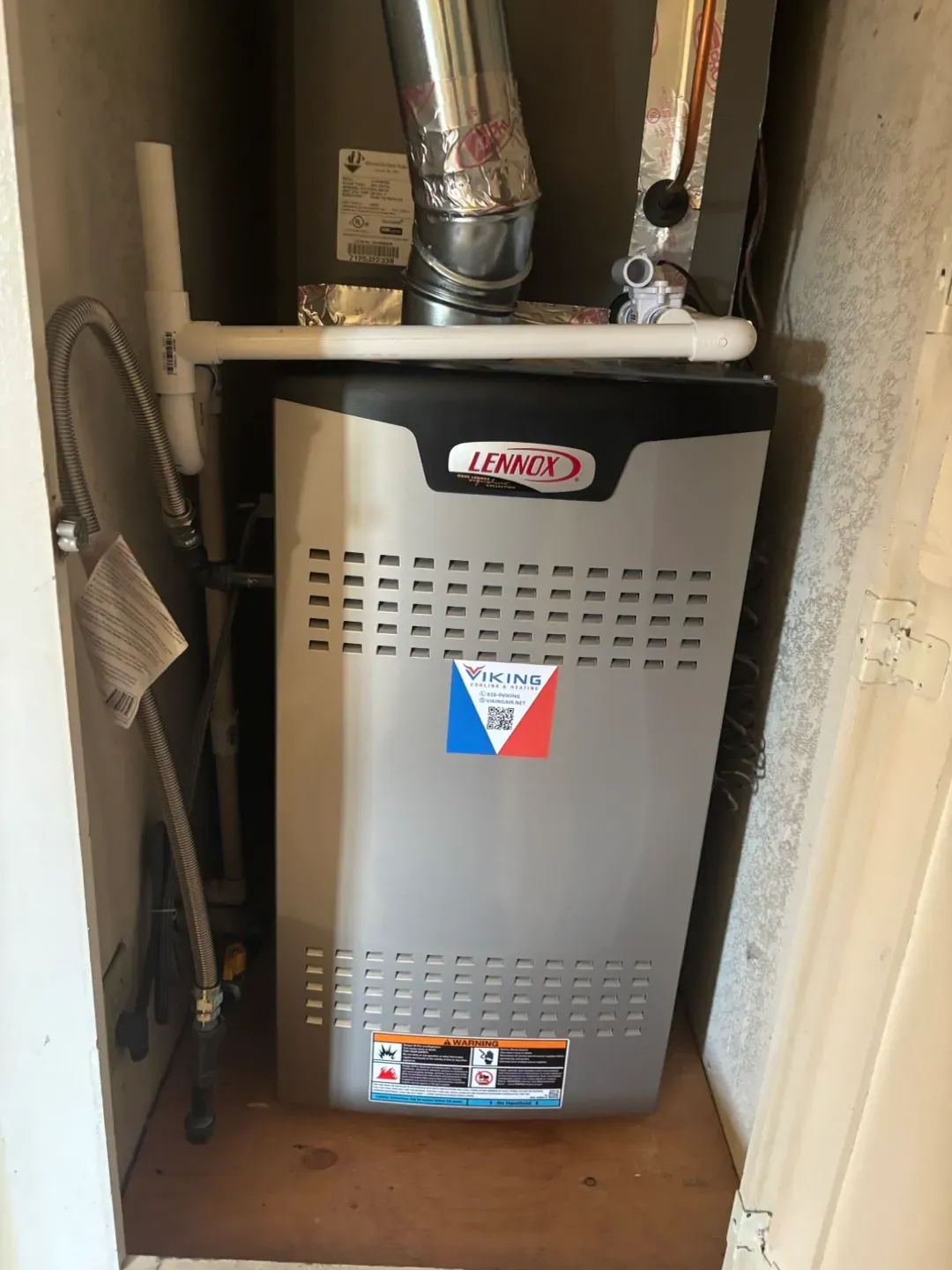
Your furnace runs on two voltages. Heavy parts like the blower use 120 or 240 volts. The brain of the system, meaning the thermostat, control board, gas valve, and relays, runs on a gentler 24 volts. The transformer is the bridge, stepping the high voltage down to 24. When it dies, the control side loses power and the whole furnace goes quiet.
Signs Your Transformer Has Blown
- A blank thermostat screen, unless it runs on its own batteries
- A furnace that’s completely unresponsive, with no lights on the control board
- Nothing happening when you switch the fan from Auto to On
- A buzzing or humming sound from the furnace cabinet
- A burning or electrical smell near the control board
- A small control-board fuse that blows again right after you replace it
That last one is a big clue. If the board’s 3 to 5 amp fuse keeps blowing, there’s a short somewhere, and the transformer may be sacrificing itself to protect the board.
What Causes a Transformer to Fail
- A short in the low-voltage wiring, like a bare wire touching metal, a pinched cable, or chewed insulation
- Power surges, which are no small thing during Tucson’s monsoon lightning storms
- Too many add-ons (smart thermostat, humidifier, zoning) overloading a standard 40VA transformer
- A failing control board or a shorted internal switch
- Plain age and wear
One local wrinkle worth knowing: packrats and other desert critters love nesting in equipment and chewing wiring, which is a surprisingly common source of the shorts that take out transformers around here.
What You Can Safely Check Yourself
Before calling, rule out the simple stuff:
- If your thermostat is battery-powered, try fresh batteries
- Check that the furnace switch, which looks like a light switch mounted nearby, is on
- Look at the breaker panel for a tripped furnace breaker and reset it once
- Replace a dirty air filter, since some shutdowns start there
- Make sure the furnace door panel is fully seated, because a safety switch cuts power if it’s open
If the system is still dead after those, stop there.
Why This Is a Job for a Pro
Replacing a transformer means working with live 120-volt wiring, which is a real shock hazard. More importantly, if you swap the transformer without finding the short that killed it, the new one can blow the instant you flip the power back on. Finding that hidden short, whether it’s in the wiring, a relay, or a chewed cable in the attic, is the actual repair. That’s when to call for heating repair rather than keep replacing parts.
If your thermostat screen is the only thing acting up, it’s also worth ruling out a wiring or thermostat issue before assuming the worst.
Stay Ahead of It
A transformer rarely fails without a reason, and that reason is usually a small electrical problem quietly building up. A quick heating maintenance visit before winter catches frayed wiring, loose connections, and overloaded circuits before they leave you cold.
Viking Cooling & Heating keeps Tucson homes warm with straightforward furnace diagnostics, and we’d rather fix the root cause than sell you a part you don’t need. Book an appointment if your furnace has gone dark and you want it sorted for good.