
Your air conditioner has a lot of parts, but the condenser does the heavy lifting outside your house, and at Viking Cooling & Heating it’s one of the components we get called about most across San Diego County. When it starts to fail, it rarely quits all at once.
It sends up small warnings first. A strange sound. A vent that blows warm. A power bill that creeps up for no clear reason.
The good news is that a failing condenser usually gives you plenty of notice, if you know what to watch for. Catch it early and you’re often looking at a simple repair instead of a full replacement.
What the Condenser Does
Your AC works in two halves. The indoor unit pulls heat out of your air. The outdoor unit, the condenser, releases that heat outside.
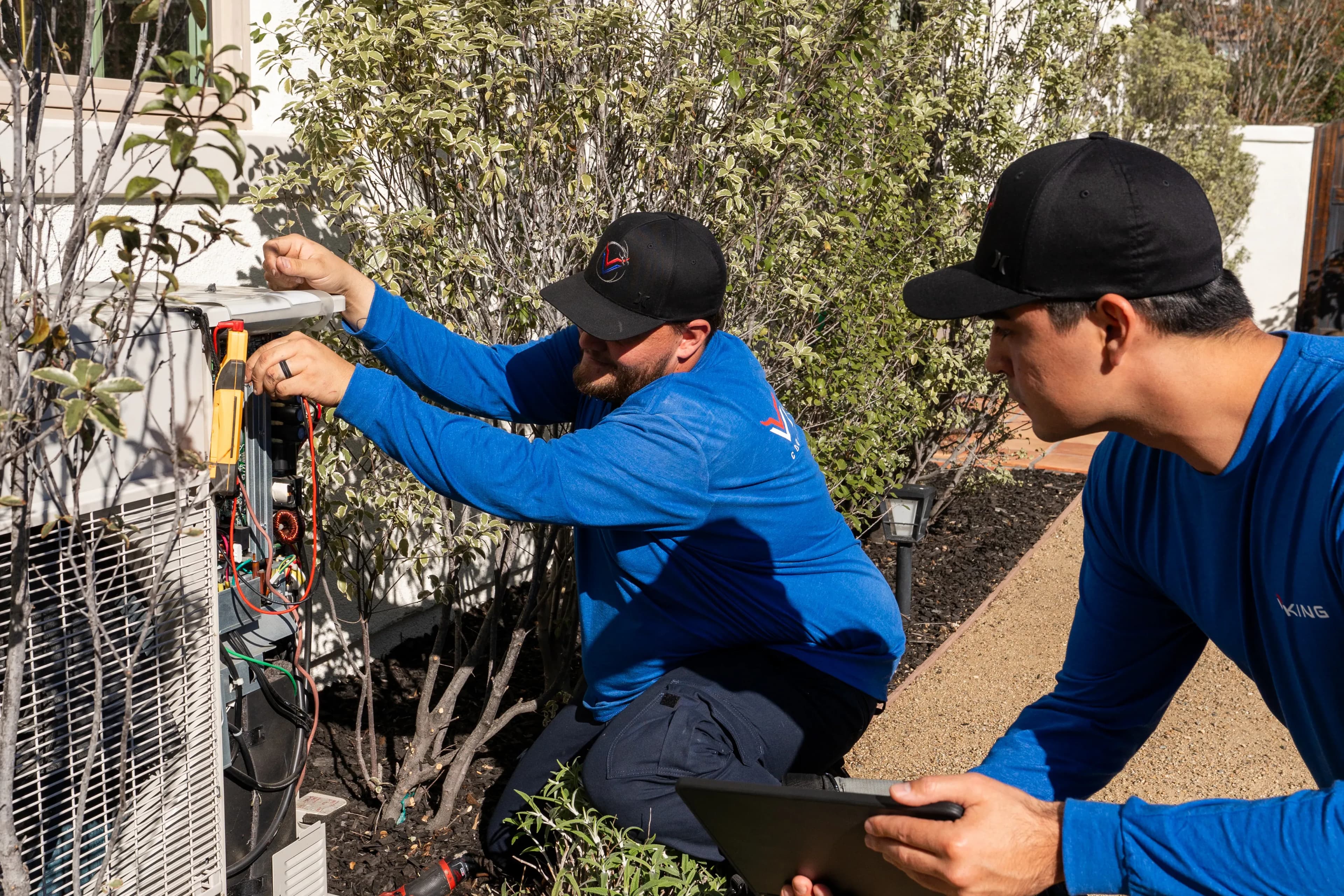
Inside that big metal box next to your house, refrigerant, a compressor, a fan, and rows of thin metal coils work together to dump the warmth your home doesn’t want. When any of those parts wear down, the whole system has to work harder to keep you comfortable. That extra strain is what shows up first, long before the unit stops running.
The Warning Signs to Watch For
Any one of these is worth noting. Two or three together usually mean it’s time to call a technician:
- Warm air from the vents. You set it to 72, the system runs, but the air feels lukewarm. A struggling condenser can’t shed heat well, so your home never quite cools down.
- Weak airflow. Hold your hand near a vent. If the flow feels feeble compared to before, the condenser fan may be failing or the coils may be too corroded to move heat.
- Loud grinding, rattling, or buzzing. A healthy condenser runs quietly. Grinding points to a worn motor bearing, rattling to loose parts or debris in the fan, and a loud buzz to an electrical fault or failing capacitor.
- Climbing energy bills. When the condenser loses efficiency, it pulls more power to do the same job. Higher summer bills with no change in your habits often trace back to the outdoor unit.
- Refrigerant leaks or ice. An oily residue near the unit or ice on the refrigerant lines signals a leak. Low refrigerant overworks the compressor, the most expensive part to replace.
- A breaker that keeps tripping. If your AC trips the breaker again and again, the condenser may be drawing too much power because a component is failing. That’s a safety issue, so don’t let it slide.
If a new noise or repeated tripping shows up suddenly, shut the system off and book AC repair in San Diego rather than letting it run and risk more damage.
The San Diego Factor: Salt Air
National HVAC advice tends to skip a factor that matters a lot around here: salt air.
If you live near the coast, from Carlsbad through Oceanside and the beach neighborhoods closer to the city, airborne salt is quietly wearing on your outdoor unit. It speeds up corrosion two to three times faster than you’d see inland. The thin aluminum fins on the coils take the worst of it, and once they pit and crumble, the unit can’t shed heat properly.
A few things to keep an eye on:
- Chalky white residue or flaky powder on the outside of the unit. That’s corrosion in progress.
- Faster aging near the water. Homes right on the coast can see real fin damage in five to seven years, while the same unit inland might last past fifteen.
- Inland isn’t safe either. Salt air travels farther than most people expect, so even homes a couple of miles back can feel it.
One easy habit helps: gently rinse the outdoor unit with fresh water every few weeks to wash off salt buildup.
Repair or Replace?
Not every warning sign means a new system. A worn capacitor, a failing fan motor, or a refrigerant recharge are all repairs that can give an aging condenser years of extra life.
Plenty of companies push replacement the moment something goes wrong. That’s not how we work. Our goal is to fix the problem in front of you, not sell you hardware you don’t need. Regular AC maintenance in San Diego catches most small issues before they grow, which is why coastal homes do well with a tune-up twice a year instead of once.
That said, a few situations do point toward replacement:
- A failed compressor on a unit over ten years old. Fixing it often costs about as much as a whole new outdoor unit.
- Old R-22 refrigerant. It’s no longer manufactured, so repairs get expensive fast.
- Widespread corrosion through the coils and cabinet. A fresh coastal-rated condenser built to resist salt beats patching the old one.
When replacement is the honest call, matching the equipment to your microclimate makes all the difference in how long it lasts. That’s worth talking through before any AC installation in San Diego.
Don’t Wait for the Full Breakdown
Condensers rarely fail on a mild spring afternoon. They quit during the first real heat wave, when they’re working hardest and every HVAC company in town is slammed.
If you’ve noticed any of the signs above, a warm draft, a new noise, a creeping bill, or rust on the outdoor unit, have a technician take a look while the fix is still small.
Viking Cooling & Heating serves homeowners across San Diego County with straight answers and repairs sized to your budget and your climate. Book an appointment and get your system checked before summer puts it to the test.