

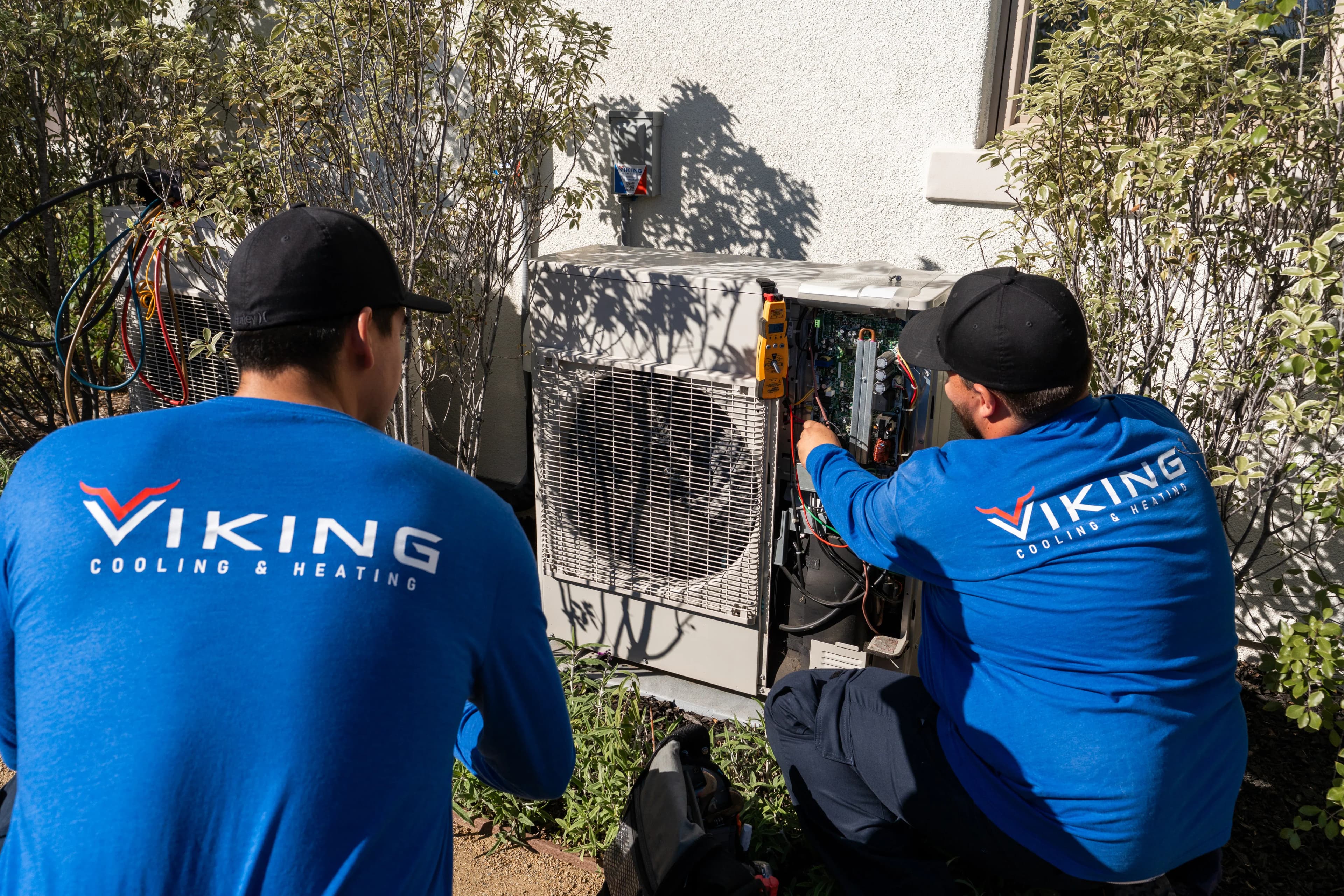
A refrigerant leak in your AC coil is one of the more frustrating problems a homeowner can run into, mostly because it hides in plain sight. At Viking Cooling & Heating, we see it all the time across San Diego: a system that cooled fine last year is suddenly struggling, and the culprit turns out to be a coil quietly leaking refrigerant.
Here’s how to spot it, what causes it, and how to think about the fix.
How to Tell If Your Coil Is Leaking
A leaking coil rarely announces itself. Instead, you notice the side effects:
- Weak cooling and run times that never seem to end
- Ice building up on the copper refrigerant lines or the coil itself
- A faint hissing or bubbling sound near the indoor unit
- Energy bills climbing without a change in your habits
- Your AC running low on refrigerant again just weeks after a top-off
That last one is the biggest tell. Your AC doesn’t burn through refrigerant the way a car burns gas. If it’s low, it’s leaking somewhere, and the coil is a common spot.
Why Coils Leak in the First Place
Most coil leaks come down to corrosion, and one type in particular:
- Formicary corrosion. The main offender. Everyday products like cleaners, air fresheners, paint, and new carpet release compounds called VOCs. In a damp coil cabinet, those VOCs react with the copper tubing and form an acid that eats microscopic pinholes into the metal. You can’t see them, but they leak.
- Thinner modern tubing. To hit today’s efficiency standards, manufacturers use thinner copper, which corrodes through faster than the thick tubing of decades past.
- Vibration wear. Years of the system cycling on and off can fatigue the metal until it cracks.
- Coastal salt air. Near the water, salt speeds up corrosion on top of everything else, a real factor in San Diego’s beach communities.
Can a Leaking Coil Be Repaired?
This is where we’ll be straight with you. Once a coil develops these pinhole leaks, patching it rarely holds. Sealant products can plug one hole while another opens up a week later, and some of them gum up the compressor and cause a much bigger failure.
Topping off the refrigerant without fixing the leak is also money down the drain. The new refrigerant just leaks back out, and refrigerant isn’t cheap. Handling it legally requires EPA certification too, so this isn’t a DIY repair.
The honest fix is usually replacing the coil, not chasing the leak. If you’re seeing the signs above, the first step is a proper diagnosis through AC repair so you know exactly what you’re dealing with.
Replace the Coil, or the Whole System?
Once you know the coil is shot, the real question is how far to go. A few guidelines:
- Replace just the coil when the system is roughly eight to ten years old or newer, the refrigerant type still matches, and the rest of the unit is healthy.
- Replace the whole system when the unit is over ten years old, still runs discontinued R-22 refrigerant, has a mismatched efficiency rating, or has been racking up repairs.
We won’t push you toward a full replacement you don’t need. But when a new coil would be bolted to a worn-out, mismatched system, we’ll tell you that too, since matching the parts is what keeps a new AC installation efficient for the long haul.
How to Lower Your Odds of a Repeat
Since VOCs drive most coil corrosion, cutting them down helps your next coil last longer:
- Go easy on aerosol sprays, harsh cleaners, and air fresheners near return vents
- Ventilate well during painting or remodeling
- Consider an air scrubber or purifier, worth discussing alongside your indoor air quality setup
- Keep up with annual maintenance so small problems get caught early
Don’t Keep Feeding a Leak
A leaking coil won’t heal on its own, and every top-off just delays the real decision while costing you money. If your AC is icing up, cooling poorly, or running low on refrigerant again and again, get it looked at before the leak strains the compressor.
Viking Cooling & Heating gives San Diego County homeowners honest diagnostics and repairs that fit the actual problem. Book an appointment and we’ll help you sort out the smartest path forward.